
Ontology manifesto · Opening
The Ontological Rosetta Stone
A manifesto for Bast AI
The opening of an evolving manifesto.
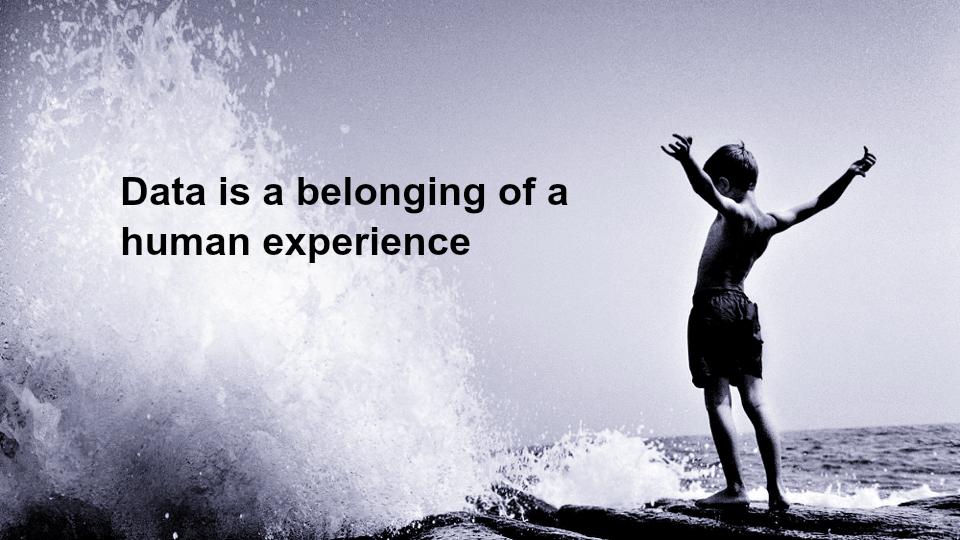
Data is a belonging of human experience.
I arrived at this through a question I kept asking at IBM: What is data? I worked alongside people whose entire professions depended on it. The answers were remarkably different.
My answer came from archaeology. Data is an artifact of human experience. A person creates it, or a person builds the system that creates it. Someone decides what a program will log. Someone names the field where that record will live. Those choices travel into everything we later claim the data tells us.
Then, this January, a curator at the SFU Museum of Archaeology and Ethnology changed my language. She described the Indigenous collections in their care as belongings. Their relationship with the people whose ancestors created them continued. Consent mattered to how they were displayed. I wrote about that encounter in Artifacts are belongings.
I had to change my slide. I also had to reconsider what I was asking people to understand. Calling data a belonging keeps us in relationship with the human experience that made it possible. That relationship carries obligations into the systems we build.
Archaeology taught me to account for my own part in an interpretation. What survives is a fragment. What I notice depends on the questions I know to ask, and on my condition when I ask them. In fieldwork, even being exhausted belongs in the record of how you received another person’s story.
I carried that discipline into engineering. I spent years in rooms debating the names of database fields because naming matters. A label gives us a way to organize something. It can also hide the circumstances that made it meaningful.
Information is data plus context. Knowledge is relational. It can emerge when someone encounters that information and recognizes what it means in their circumstances. The engineering has to make that encounter possible.
What an explanation must preserve
This is my definition of explainability:
Explainability is the preservation and rendering of the explicit and implicit evidence, context, provenance, transformations, and inference necessary for a human to construct and inspect an interpretation.
Preservation keeps the basis of an interpretation available. Rendering concerns the person encountering it. They need a way to examine how meaning was constructed. What we cannot recover or make explicit belongs in the explanation too.
Tom Gruber’s definition of ontology gives us an engineering foundation: an “explicit specification of a conceptualization.” We can describe relationships and make our assumptions available for inspection. We can also be explicit about what the representation leaves out.
At Bast, we work with multiple ontologies. A person’s reality exceeds any representation we can build. The relationships we make explicit must remain open to correction as circumstances change. This means maintaining the system and testing its interpretations throughout its life.
I think of this as an ontological Rosetta Stone: an aid to understanding information in the context in which a person needs it. Its usefulness depends on what becomes understandable to them.
Dave Snowden writes, “In the context of real need, few people will withhold their knowledge.” I have seen another person’s need reveal a use for my own expertise that I had never considered. Understanding their circumstances changed how I could contribute.
This is where I want to explore altruism: what happens when recognizing another person’s need changes what becomes possible between us? Our systems should make room for that encounter. The information we preserve can help knowledge emerge when someone needs it.
The receiver belongs in the architecture
Our work with Craig Hospital makes this concrete. We developed ontology lenses for patients and caregivers, alongside a provider lens. Each begins with a different relationship to the same care situation. What matters is what concerns the person using it.
In the personas and case material we worked through, I saw a pattern. The patient was concerned about the caregiver. The caregiver was worried about their own capacity to keep going. The provider was concerned about the caregiver too.
I know something of this from caring for my sister. Exhaustion changes what you can take in. Asking for help can be difficult for the patient who can see how much the caregiver is already carrying.
That convergence changed where I looked for an opportunity to help. Our mission is to improve the patient’s quality of life. Enabling the caregiver to understand what they need, when they need it, belongs at the center of that work.
A role is a starting point. We still have to discover this person’s question. Their questions must be able to change the explanation. Their disagreement must have somewhere to go.
Bast builds the conditions for people to understand information in their own circumstances, so that knowledge can emerge. Whether that understanding happened is part of what we must examine.
I bring an inheritance from IBM to this work. My friend Adam Cutler helped make its ethical commitments concrete for me; his work on Everyday Ethics for Artificial Intelligence is part of Bast’s lineage. IBM’s principles state:
“The purpose of AI is to augment human intelligence.”
“Data and insights belong to their creator.”
“AI systems must be transparent and explainable.”
At Bast, I take these as obligations in building AI that helps people create higher-quality outcomes faster than we could alone. And I want to make the accountability explicit: every person involved in creating an AI system is accountable for considering its impact in the world. So are the companies that sponsor it.
That obligation continues after deployment. We have to examine what happens when people use what we build, and change our work when the evidence calls for it. It includes what our systems ask of the living world that sustains us.
Today marks four years since Bast was formed. This is the opening of our ontology manifesto, and the work I want to make explicit: how we build belongs in what we explain. Whether someone can construct and inspect an interpretation belongs in how we judge our work.